- Human Centric Coaching
“Ok, noted.”

- Chapter I
The Story
For four straight weeks, she stayed late.
Dinners missed. Weekends given up. Rewriting the numbers one more time so the report would be right — and on time.
She hits send at 11:47pm, the night before the deadline.
The next morning, her manager replies:
“Ok noted.”
We posed this scenario to a room of coaches-in-training and asked: if you were her, how would you feel?
One word kept surfacing.
Disappointed.
Not angry. Not shocked. Just quietly, achingly disappointed.
Most of us have been her.
And here’s the harder truth: many of us have been that manager, too. Not out of indifference — but because we lead the way we were led. Leaders inherit the only leadership they’ve ever seen, and hand it down in turn — the warmth and the wounds alike.
Until someone interrupts the handover.
There is a different way. A way of responding that makes the person in front of you feel that their effort — and they themselves — matter. It has a name most people already know: coaching.
Though probably not the coaching you’re picturing.
- Chapter II
“Isn’t putting the human at the center… obvious?”
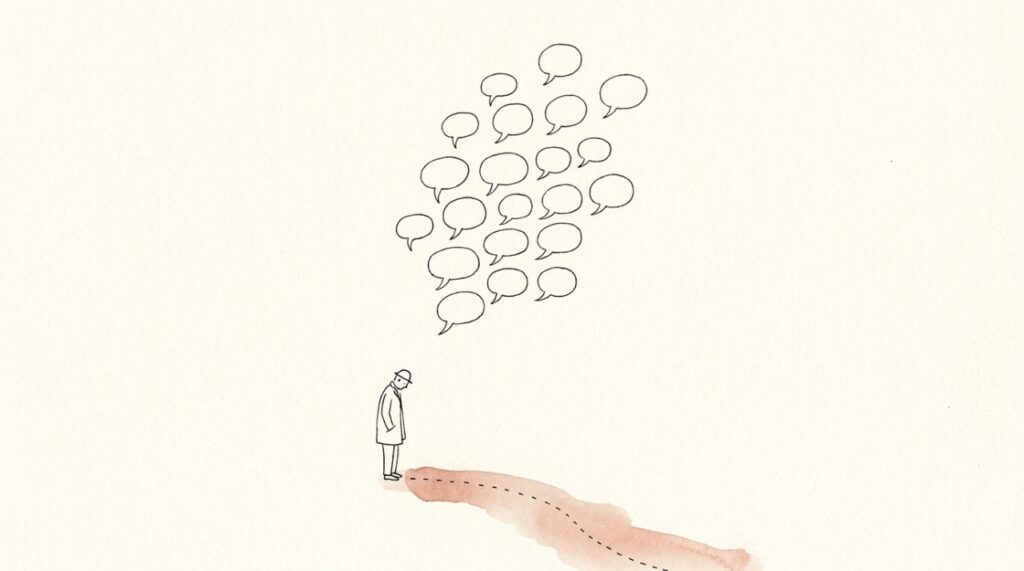
You might be thinking it already: of course coaching is about the human. Of course leadership is about people. Who would ever disagree?
Nobody disagrees. That’s exactly the problem.
Everyone agrees with it. Almost nobody does it.
The intent is usually there. But in our 20+ years of training coaches, we’ve watched countless people believe they were coaching, when they were actually:
- Telling, directing, advising
- Teaching
- Hiding suggestions inside questions
- Solving the situation
- Leaning on techniques instead of the person
None of this is bad. It’s just not coaching a human. It’s managing a situation — with a person standing inconveniently in front of it.
And notice: the manager who says “Ok noted” and the coach who hides advice inside questions are missing the same thing. Not skill. Not good intentions.
- Chapter III
We Call It Being Humancentric
Humancentric — placing the person, not the situation, at the center of the conversation.
How they think. How they feel. How they uniquely operate. That becomes the whole point — not the deadline, not the dilemma, not your excellent advice.
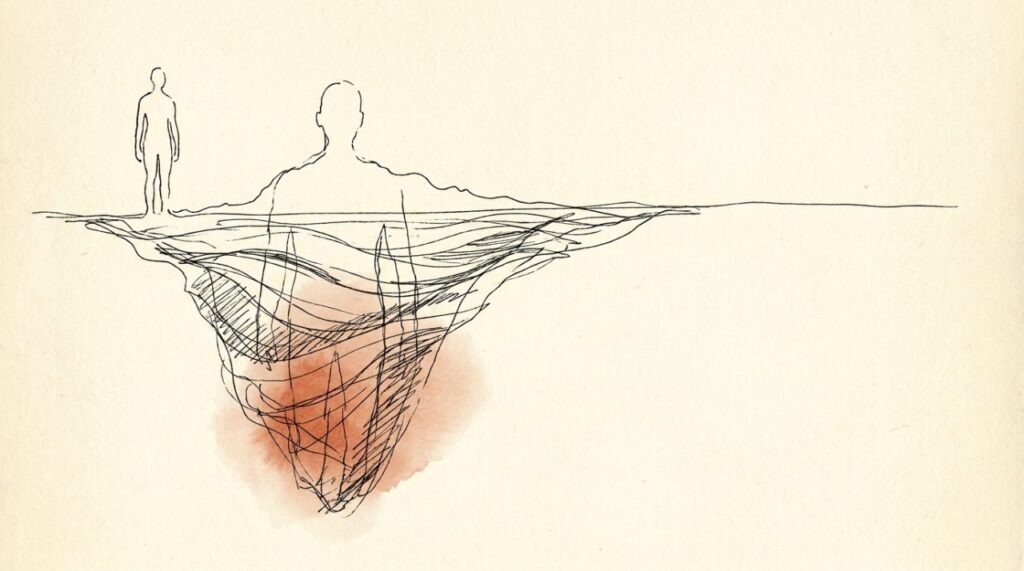
A one-line definition — and deceptively easy to agree with. Here’s why it’s harder than it sounds: the person you’re placing at the center is mostly invisible. What you can see — their words, their behaviour — is only the surface. Beneath it sit the emotions, beliefs, and self-image actually driving everything. Often invisible even to them.
Being Humancentric means learning to work at that depth. Which is why agreeing with this page and being able to do it are two very different things.
See the Person, Not Just the Situation
Every situation someone brings you has a person living it.
Attend only to the situation, and you’ve helped them once. See the person, and they begin to handle this situation — and the next ten — themselves.
Because every person is already the control center of their own life. Who they believe themselves to be shapes how they think, feel, and act — and that shapes their reality. Mostly without them noticing.
Humancentric Coaching makes that visible. It draws out what’s already inside a person — their wisdom, their strengths, their own answers — instead of installing yours.
And if you’re wondering about the results you’re still accountable for: they don’t get sacrificed. People who feel seen start solving their own problems — and pull the results themselves.
Being Humancentric is not a technique. It’s a change in the way you approach the world.
- Chapter IV
What It Looks Like
- i · The corridor
You’re a team lead, mid-rush, when a team member stops you — visibly anxious about his deadline. Every instinct says: tell him what to do. It’s faster.
Instead, you take five minutes for him, not the task. Then you ask:
“What do you need to tackle this in a calm and clear way?”
He walks away with his own plan. And he owns it in a way yours never could have been.
And if you’re wondering about the results you’re still accountable for: they don’t get sacrificed. People who feel seen start solving their own problems — and pull the results themselves.
- ii · The session
Now a different chair. You’re a coach — she’s been your client for a month. Today she arrives glowing: she’s been nominated to present at her company’s annual dinner. Her first time on a big stage. Thrilled — and terrified.
You’ve spoken to crowds of hundreds yourself. You could hand her ten tips before she finishes her sentence.
But this isn’t about you. So you ask:
“What would make this a win for you?”
She pauses. Lights up. “I want to know, at the end of that night, that I did more than I imagined I could.”
Now you both know what you’re really working on. And it was never the slides.
- iii · And back to that report
Remember her? Four weeks of late nights. The 11:47pm send.
A Humancentric reply doesn’t take longer than “Ok noted.” It just sees more:
“Received. I know what this month took — thank you. Let’s walk through it together tomorrow; I want to hear how you got there.”
Same channel. Same ten seconds. A completely different message: you matter.
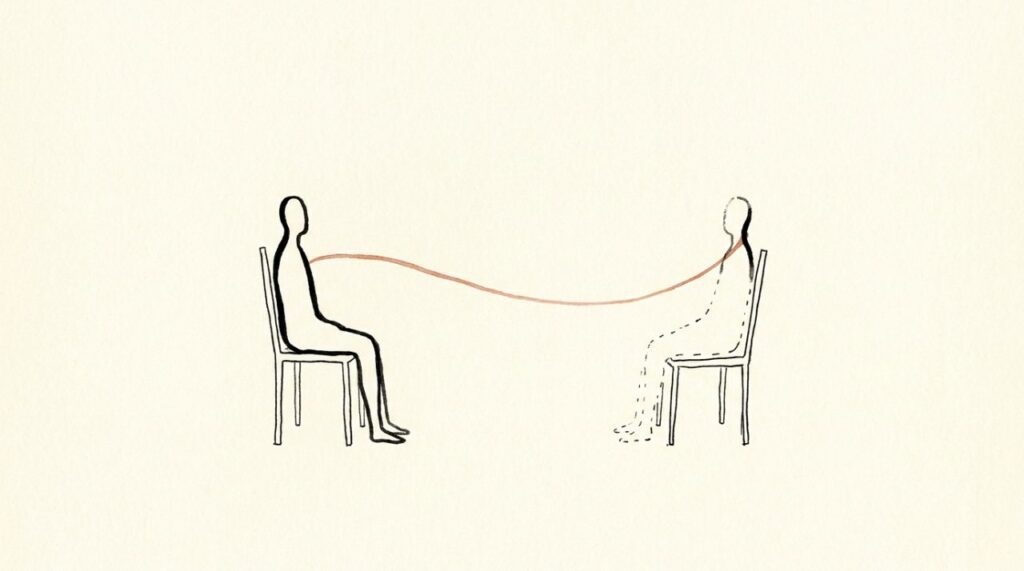
Notice what all three moments share: trust in the other person’s capacity, and the discipline to hold back — so they can step forward.
And this applies whether you lead a team, raise a family, or want to coach professionally. The shift is the same.
- Chapter V
The Hardest Part Isn’t Learning. It’s Unlearning.
First, Let’s Be Honest About Your Reality
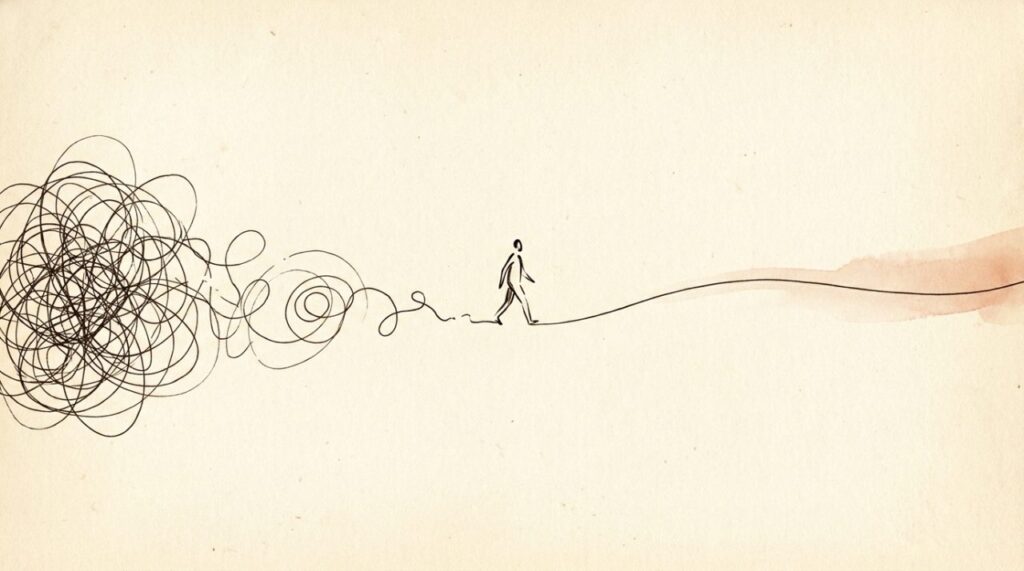
You don’t have time. You’re squeezed by targets, and solving the problem yourself is fast and certain. Developing the person? Slower — and a gamble. Will they actually get better? If that’s what you’re thinking, you’re not cynical. You’re accurate.
That’s why this is trained like a muscle, not taught like a theory. The first reps feel slower. There will be pushback — from the people used to getting your answers, and from the voice in your own head saying just fix it. But every rep compounds. A person you develop stops bringing you the same problem twice — then starts handling things you never even see. The five minutes you invest come back multiplied, across everyone you lead.
Becoming Someone Different in Conversation
Because that’s what this really trains — less the collecting of techniques, more the person you are when someone sits across from you:
- To listen past your own biases.
- To withhold your opinions so the other person can find theirs.
- To ask the question that opens something, instead of the one that steers.
- To sense what’s happening beneath the words.
- To empty yourself enough to reflect back a clear picture of them.
These aren’t soft skills. In an age where AI can answer any question in seconds, they are the skills that cannot be automated — the ability to be genuinely present with another human being.
They already exist in you. They just need to be unlocked, trained, and made reliable.
And Yes — There Is Real Method Underneath
Beneath the experience sits a complete architecture we’ve refined over 20+ years of training coaches: models of how humans actually work, frameworks that guide the coaching conversation, and a session process aligned to the International Coaching Federation’s professional standards. Our graduates carry a full toolkit — and it’s taught by a faculty of ICF-credentialed coaches (PCC and MCC) who still practise what they teach, every week. Meet the team
But we’ve learned something about the toolkit: in unready hands, it produces technicians. In formed hands, it produces coaches.
Because a toolkit alone was never enough. It takes the right mindset. The willingness — and the compassion — to build that muscle, conversation by conversation. And above all, a bigger purpose: a genuine desire to impact the people around you.
That purpose is what people feel when you sit across from them. It defines how you come across — and the impact you’re able to make.
So we form the person first — and let you experience the method, rather than read about it here.
Because the method isn’t the point. You are.
- Chapter VI
You Become a People Developer
Most people come to us thinking this is about work. Managing people better. Running better conversations.
And it does all of that.
But for many, there’s a quieter question underneath — the one that surfaces on a slow Sunday: I’m good at what I do. Is this all there is? This work answers that one, too.
And for some, the answer becomes a chapter of its own. After years of climbing, coaching becomes the work itself — a second act built on everything the first one taught you, and the earned ability to say: I am a coach.
Because somewhere along the way, something shifts. The way you listen. The way you ask. The way you see the person in front of you — at work, at the dinner table, with the friend who calls at 11pm.
Think of the leader who once inspired you. People describe that person the same way, every time:
- “believed in me.”
- “genuinely cared.”
- “showed me what I was capable of.”
That’s not charisma. That’s being Humancentric — and it can be trained.
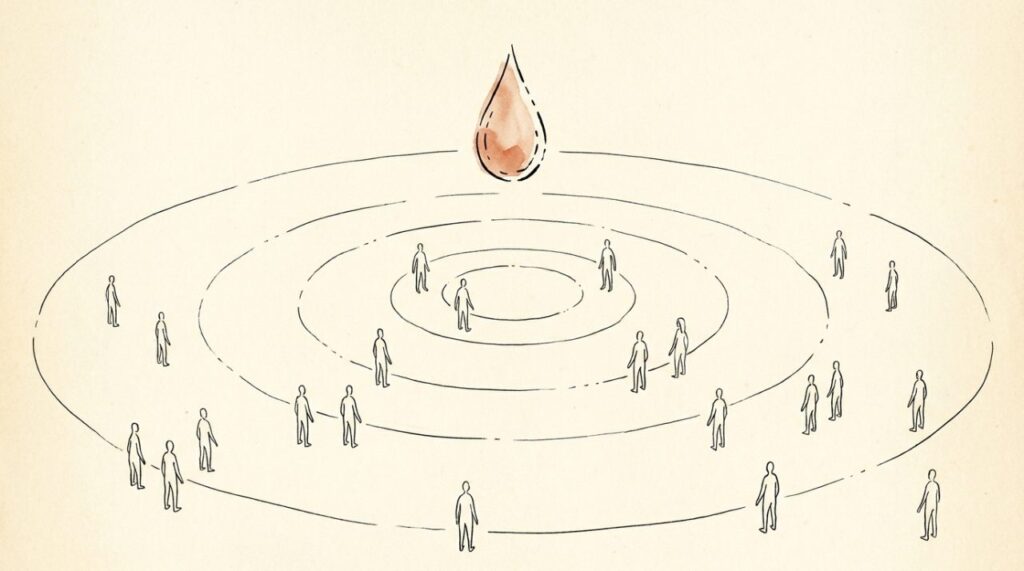
And here’s what happens next: the people you develop grow bigger than themselves. They start seeing others the way you saw them. They go on to develop people of their own.
One Humancentric person creates more. That’s the ripple.
- Chapter VI
The World Is Catching Up to This
The World Economic Forum’s Future of Jobs Report names the core skills employers need most through 2030. Alongside analytical thinking sit a striking number of deeply human ones: leadership and social influence, empathy and active listening, motivation and self-awareness, curiosity. In fact, leadership and social influence recorded the single largest jump in importance of any skill since the previous report.
And when the WEF assessed over 2,800 skills for how far generative AI could substitute for a human, empathy and active listening showed no substitution potential at all.
In an era where machines answer any question in seconds, the ability to be genuinely present with another human being isn’t a soft skill.
It’s the scarce one.
- Chapter VIII
Real Coaches. Real Practice. Real Stakes.

A faculty that coaches, not just teaches.
20+ years of coaching experience across the faculty, holding ICF PCC and MCC credentials — invited as speakers and panellists, still coaching real clients every week.
You coach real people before you graduate.
Not classmates role-playing. Real clients, real sessions, real change — built into the program.
Coaching for Good.
Our students and alumni offer free public coaching in partnership with Samaritans of Singapore. Not many schools run this. We think every school should.
A year of support after certification.
Accountability, practice, and community continue long after the ceremony — because formation doesn’t end at graduation.
- Epilogue
Where Do You Begin?
One thing to know first: mindset shifts take time, so our programs take time. There is no certificate-by-tomorrow here — at any price, by design. If that sounds right to you, you’re in the right place.
People arrive here at every stage — stepping into a first leadership seat, deep in the middle of a career, or planning what comes after it. The stage doesn’t matter. Wanting people to grow around you does.
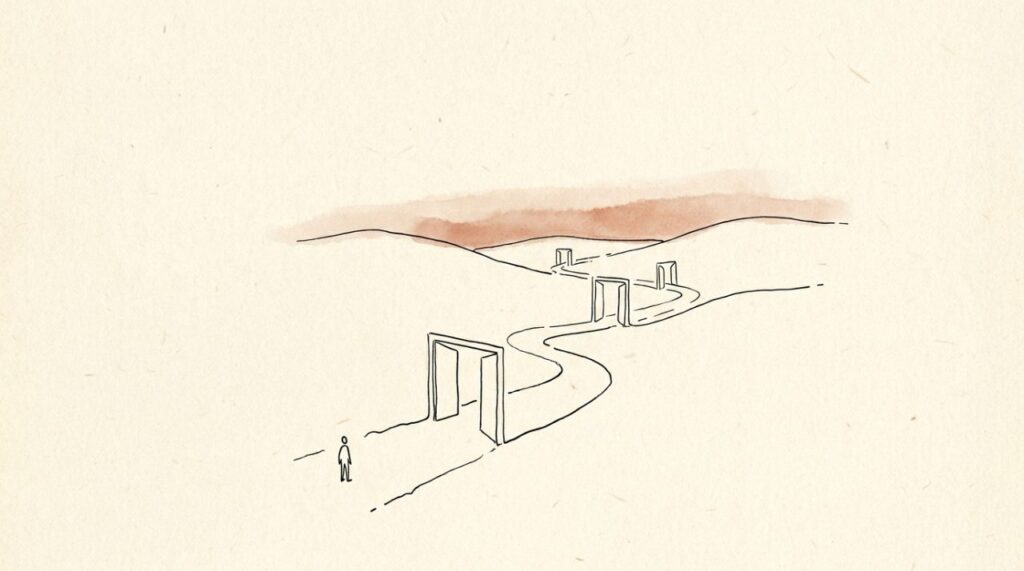
The first gate · Feel it first Coaching for Good
Before you learn to coach, experience being coached. Through Coaching for Good, our coaches offer free coaching to the public — come sit in the space of someone who sees you, not just your problem. Many people tell us this is the moment it clicked.
The second gate · Start with the approach Humancentric Approach (HCA) Module
A 5-week online experiential series, open to everyone. Don’t study humancentricity — practise it, live, with experienced coach trainers and a community of people on the same journey.
The third gate · Lead with it Humancentric Leader (HCL) Module
For people leaders. Bring the Humancentric Approach into your 1-on-1s, reviews, and the conversations that actually shape your team — and become the leader people describe as “believed in me.”
The fourth gate · Go all the way Humancentric Coach Certification Program
Before you learn to coach, experience being coached. Through Coaching for Good, our coaches offer free coaching to the public — come sit in the space of someone who sees you, not just your problem. Many people tell us this is the moment it clicked.
Not sure where to start? Take the 3-minute Humancentric self-assessment and see where you stand today — as a leader, and as a potential coach. Take the self-assessment
